Epsilon CAM's cathode platform spans material development, demonstration scale production, electrode and cell testing and customer qualification. A dedicated R&D team in Moosburg works across LFP and LMFP grades, for development of powder synthesis and characterization through half-cell and full-cell testing.
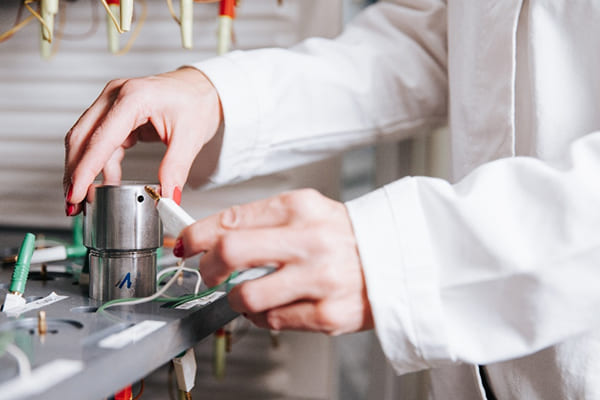
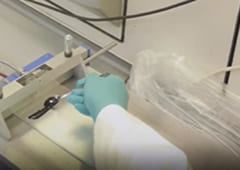
Cell testing at the Cathode Technology Center, Moosburg, Germany
LFP is increasingly used in electric mobility and energy storage because it combines strong thermal stability, long cycle-life and cost advantages associated with iron and phosphate based chemistry. Epsilon is developing LFP solutions for power and energy applications across PHEV, BEV, 12V starter and energy-storage use cases.
LFP chemistry is valued for stable operation across demanding mobility and storage applications.
LFP supports applications that prioritise durability and repeated charge-discharge operation.
Iron and phosphate based chemistry can reduce dependence on nickel and cobalt intensive cathode materials.
Epsilon's portfolio includes grades for PHEV, BEV, 12V starter and energy-storage requirements.
The Moosburg Technology Center supports materials research, demonstration-scale production and advanced cell testing. Epsilon's industrialization plan in India is intended to support the global and scalable cathode supply pathway.
Materials research, pilot and demonstration-scale production, and powder-to-full-cell testing in Moosburg
Samples qualifications ongoing with cell manufacturers
A 20,000 ton manufacturing facility in India for global, scalable cathode supply chain
LFP Gen 3.0 is Epsilon CAM's next-gen cathode product. It has been developed around higher compaction density, high discharge capacity and strong first-cycle efficiency, and is currently under customer qualification across Europe, US and Asia-Pacific
Following the acquisition of the Moosburg center in early 2024, Epsilon CAM began work on the next generation of material development. The Gen 3.0 LFP is now under customer qualification, with Gen 4.0 on the development roadmap.
Moosburg center acquired in early 2024. Material development initiated for Gen 2.0 LFP cathode material
Achieved Gen 2.0 LFP development with higher capacity and improved purity. Customer qualification and tonne-scale deliveries initiated
Launches LFP Gen 3.0 Cathode material with high compaction density and high discharge capacity with customer qualification in progress in Asia-Pacific, US & Europe
Development of next-generation 4.0 LFP material ongoing for futuristic EVs & ESS batteries
| Compaction density (g/ccm) | > 2.6 |
| 1st 0.1C charge capacity (mAh/g) | > 160 |
| 1st cycle efficiency (%) | ≥ 97 |
| 0.1C discharge capacity (mAh/g) | > 159 |
Recommended grades
Recommended grades
Recommended grades
Recommended grades
Recommended grades are a starting point and are confirmed through application testing with our team.
Epsilon CAM's product portfolio includes LFP and LMFP materials in single-crystal and spherical agglomerated morphologies, with grades designed for power and energy applications. Product selection should be based on the required rate performance, processability, electrode design and end application.
Our LFP portfolio spans high-power, medium-power and energy-focused grades for PHEV, BEV, 12V starter and energy-storage applications.
LMFP incorporates manganese to increase cell voltage and support improved energy density while retaining the thermal-stability characteristics of the phospho-olivine structure. Epsilon CAM's LMFP grades are positioned for BEV and energy-storage applications.
Epsilon CAM GmbH, Ostenriederstr. 15, D-85368 Moosburg an der Isar
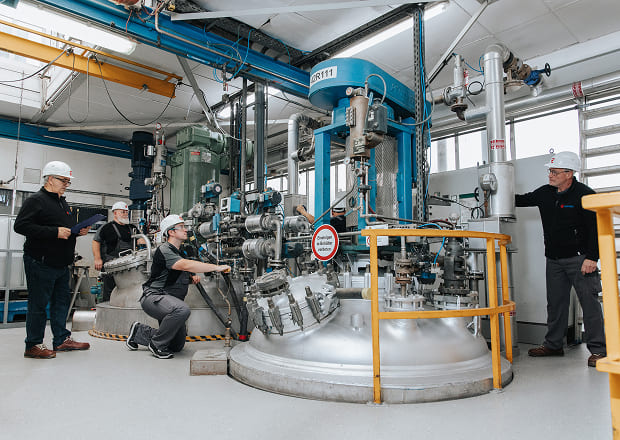
Epsilon CAM's Cathode Technology Center in Moosburg brings together LFP and LMFP materials expertise, a demonstration-scale facility, and advanced powder, electrode and cell testing. The center supports development from laboratory and pilot scale through customer evaluation.
LFP and LMFP materials research by a dedicated team of cathode experts.
Pilot and demonstration-scale production to support customer evaluation.
Powder, slurry, electrode, half-cell and full-cell evaluation in one center.
Materials and process development backed by Epsilon CAM's patent portfolio.
From powder synthesis to full-cell evaluation, each stage is developed and tested in Moosburg.
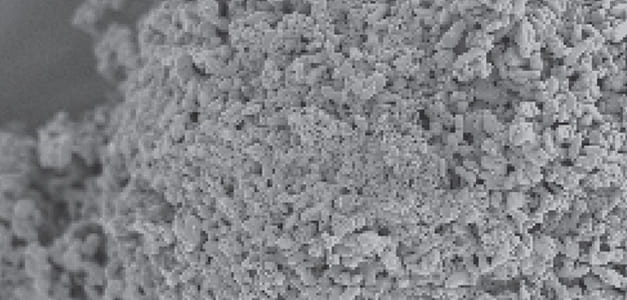
Material synthesis and characterisation from laboratory to pilot scale.
Multiple mixing systems, processes and formulations to evaluate material and electrode behaviour.
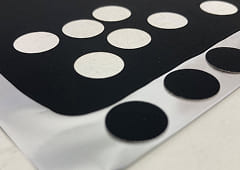
Coating, electrode-design evaluation and densification.
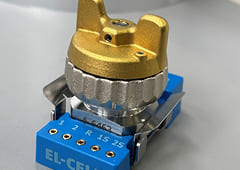
Capacity, rate performance and efficiency testing.
Rate performance, efficiency, cycle life, impedance and low- and high-temperature performance.
Epsilon CAM's cathode process platform begins with lithium, iron(III) and carbon precursors and progresses through batching, mixing, milling, drying, calcination and particle-size control to produce cathode active material.
Cell manufacturers across Asia-Pacific, Europe and the United States are evaluating LFP Gen 3.0.
Read releaseA non-binding MOU for potential multi-year supply of battery-grade lithium carbonate.
Read releaseLFP Gen 3.0 introduced, developed at the Cathode Technology Center in Moosburg.
Read release